

Spinal stenosis exercises may help many adults over 50 walk further with less leg heaviness, especially when the movements favour a gently forward-bent posture. Lumbar stenosis narrows the space around the nerves in the lower back, and this often shows up as aching, tired or tingling legs that settle when you sit or lean forward.
This article explains why walking can bring on symptoms, which exercises and pacing habits are commonly used, and when it is reasonable to ask about injections or a surgical opinion. It is general information, and a physiotherapist can adapt it to your own assessment findings.
Why Walking Brings On Leg Heaviness and Pain
Lumbar stenosis usually develops gradually as discs lose height and joints and ligaments in the spine thicken with age. Together, these changes can leave less room for the nerves that travel to the legs.
When you stand upright or walk, the spinal canal tends to narrow slightly further, which may irritate or limit blood flow to those nerves. Many people notice leg pain when walking that builds over minutes, along with heaviness, cramping or numbness in the buttocks, thighs or calves.
Sitting or bending forward often opens the canal a little and eases symptoms. Similar symptoms can have other causes, which is why an assessment for lower back pain and sciatica is a sensible first step.
Why Forward-Bent Positions Often Ease Symptoms
Bending forward gently flexes the lumbar spine, which can widen the canal and the openings where nerves exit. That is why some people with stenosis tolerate cycling, pushing a walker or leaning on a cart better than walking upright.
This does not mean every person must avoid backward movement. Some people find extension uncomfortable, while others tolerate it well, so a physiotherapist usually tests both directions before choosing exercises.
The aim is not to hide symptoms but to build capacity. Flexion-based movement can give a more comfortable starting point, and strength, mobility and pacing then help extend what you can do.
Spinal Stenosis Exercises That Are Commonly Used
The right programme depends on your symptoms, fitness and other health conditions, so treat these as examples rather than a prescription. Commonly used options include:
- Knee-to-chest stretches lying on your back, held gently
- Pelvic tilts to reduce lower back arching
- Seated forward leans with a supported, straight back
- Stationary cycling with a slightly forward-leaning posture
- Core strengthening such as gentle bridges
- Hip and thigh strengthening, such as sit-to-stands
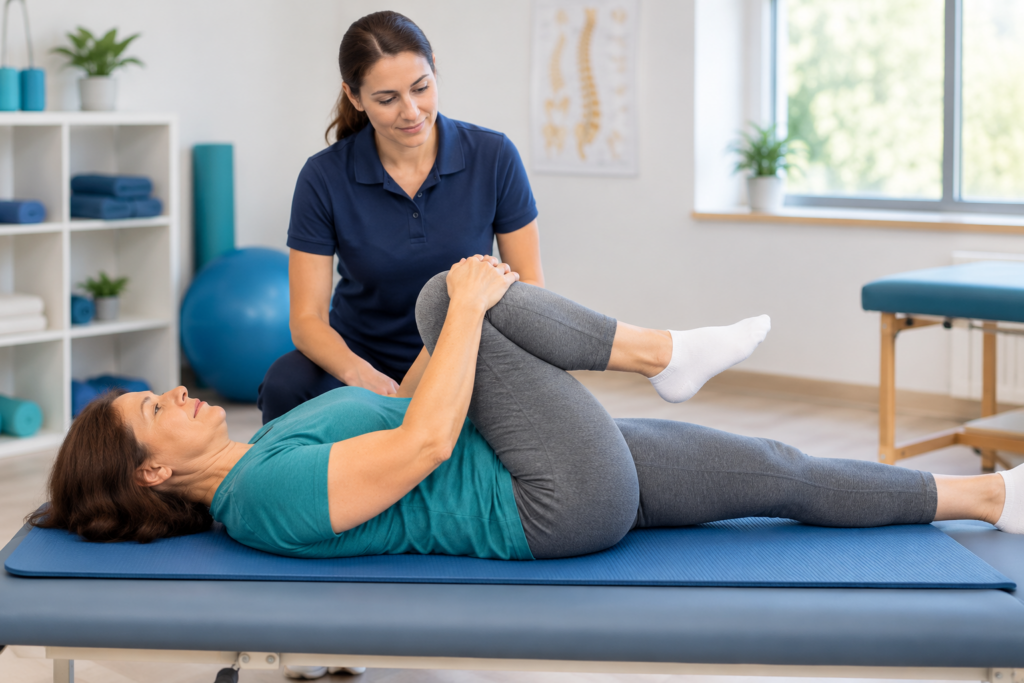
Aim for slow, controlled movement and steady breathing throughout, since rushing or holding your breath can add strain.
Stenosis stretches should feel like mild tension, not sharp or travelling leg pain. Progress gradually, and stop a movement that clearly worsens numbness or weakness. A physiotherapist can show how therapeutic exercise is graded for your level.
Pacing and Daily Habits for Longer Walks
Pacing means choosing a walking time that stops before symptoms become strong, then resting briefly in a comfortable position before continuing. Over several weeks, many people try to extend that time slightly, guided by how symptoms settle afterwards.
Practical habits may help:
- Use a rollator or shopping cart if leaning forward feels better
- Break errands into shorter stretches with seated rests
- Wear supportive, cushioned footwear
- Keep a simple log of walking time and symptoms
- Alternate standing tasks with sitting breaks
Clear, personalized patient education can help you set realistic targets and recognize a flare-up early.
How Lumbar Stenosis Physiotherapy May Help
Lumbar stenosis physiotherapy usually begins with a history of your walking tolerance, a neurological screen and movement testing. The findings help decide which positions ease symptoms and which muscles or joints are limiting you.
Treatment often combines graded exercise, hands-on techniques for stiff joints or tight muscles, walking advice and a home program. Options such as digital home exercise programs can keep the plan clear between visits.
Physiotherapy cannot reverse the structural changes seen on imaging. It may, however, improve strength, flexibility and confidence in movement, which can help some people stay active. Many people also value having someone check their technique.
When Injections or a Surgical Opinion Are Worth Discussing
Consider talking with your family doctor if symptoms keep limiting daily life after a sustained, well-guided period of exercise and pacing. They can discuss imaging, medication options and whether a specialist referral is appropriate.
Epidural steroid injections may offer temporary relief for some people, which can make exercise easier. A surgical opinion is often considered when walking tolerance keeps falling, pain is severe, or weakness is progressing.
Surgery is not needed or suitable for everyone, and decisions are individual. Questions about risks, recovery time and expected benefit are worth raising. Your physiotherapist can share findings with your doctor to support that conversation.
Key Takeaways
- Leg heaviness that eases with sitting or forward bending is a common pattern in lumbar stenosis.
- Gentle flexion-based exercise, strengthening and pacing may improve walking comfort.
- Injections or surgery are options to discuss with your doctor if progress stalls.
- An individual assessment helps match exercises to your symptoms.
When to See a Doctor Promptly
Seek medical care urgently if you notice any of the following:
- New loss of bladder or bowel control, or numbness in the groin or inner thighs
- Rapidly worsening leg weakness or a foot that drags or slaps
- Severe, unrelenting pain, or pain with fever or unexplained weight loss
These can signal serious nerve compression and should not wait for a physiotherapy appointment.
Frequently Asked Questions
Do I need an MRI before starting exercises?
Not always. Many people begin exercise based on a clinical assessment, and imaging is usually requested by a doctor when symptoms are severe, changing or not responding to care. Scan findings also may not match how much pain someone feels, so your symptoms and function guide the plan.
How often should I do these exercises?
Frequency varies, but many programs use short sessions on most days rather than one long session. Starting with a few gentle movements and adding repetitions slowly is often easier to maintain. Your physiotherapist can adjust the schedule around flare-ups, other health conditions and how your legs respond on walks.
Can I do these exercises with knee or hip arthritis?
Often yes, with adjustments. Hip and knee stiffness can change how you walk and how much your back works, so exercises may need different positions, ranges or loads. Share all your joint concerns during assessment so the program can respect each area rather than treating the back alone.
Staying Active With Spinal Stenosis
Spinal stenosis can change how your spine tolerates standing and walking, but many people remain active with a plan that respects their symptoms. Starting with a physiotherapy assessment at Kingsbridge Physiotherapy Centre in Mississauga can clarify which movements and pacing steps suit you. Bring your walking log to your first visit so the discussion is more specific.